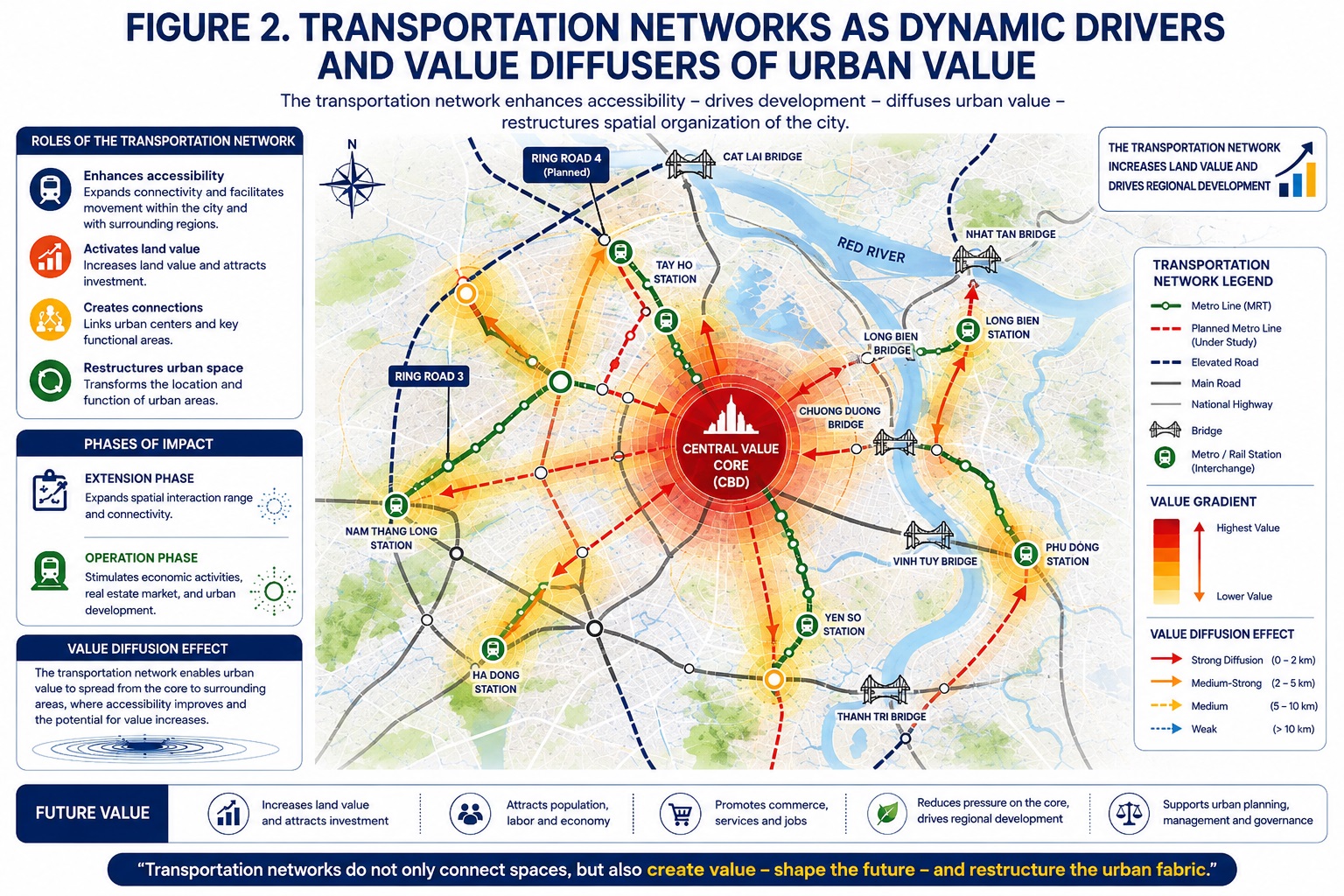
 Figure 2. Transportation infrastructure acts as a catalyst for the activation and diffusion of urban value.
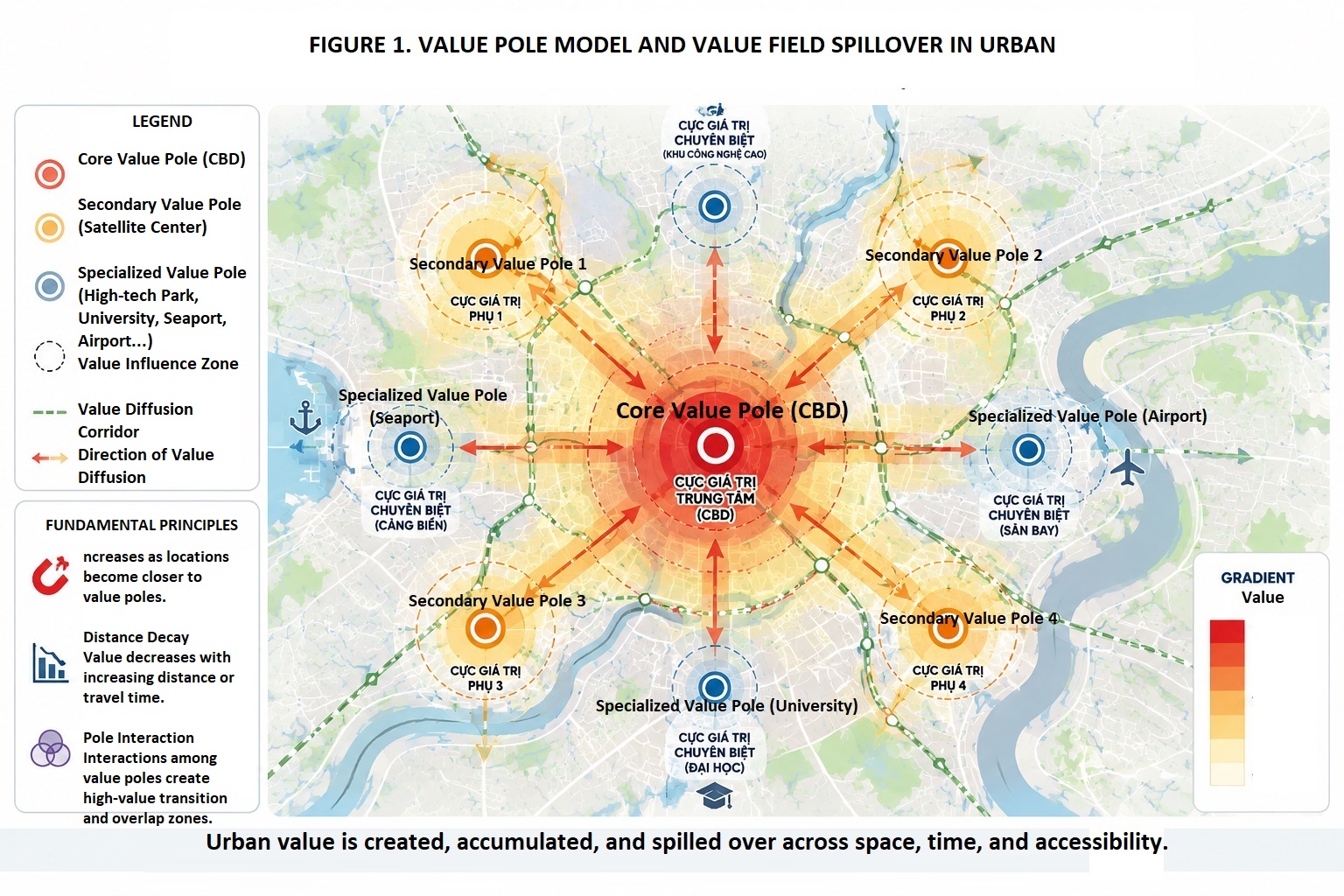 Figure 1. Value poles and the diffusion of urban value fields across urban space.
Urban value is not distributed uniformly. Instead, it tends to concentrate around economic centers, administrative hubs, transportation nodes, and areas with high levels of accessibility.
Law of Spatial Attraction: Major economic centers generate strong attraction forces for residents, businesses, and investment capital. The closer a location is to these centers, the greater its potential land value tends to be.
Law of Distance Decay: Urban value gradually declines as distance or travel time to value poles increases. Distance in this context includes both physical distance and accessibility measured through travel time.
Law of Multi-Polar Interaction: Modern cities contain multiple value poles operating simultaneously. The interaction among these poles creates overlapping influence zones where value transformation tends to occur more rapidly than in surrounding areas.
Figure 2. Transportation infrastructure acts as a catalyst for the activation and diffusion of urban value.
One of the key findings of this research is the decisive role of transportation infrastructure in shaping urban value fields. Metro systems, ring roads, river-crossing bridges, and expressways do not merely improve accessibility; they fundamentally restructure the economic geography of urban regions.
Land values often begin to increase immediately after major infrastructure projects are announced due to market expectations. Once these projects become operational, value growth becomes increasingly supported by real demand, population concentration, service expansion, and the emergence of new value poles.
A new infrastructure project affects not only its immediate surroundings but also generates broader spillover effects. Areas that previously suffered from low accessibility may become activated for development, attract investment, and gradually integrate into the wider urban value network.
Research on the Law of Urban Spatial Value provides a scientific foundation for understanding land value formation, forecasting spatial development trends, optimizing land-use planning, and supporting Transit-Oriented Development (TOD).
Exploring the law of urban spatial value means uncovering the fundamental mechanisms that drive urban evolution. By understanding how space generates value, we can improve forecasting, enhance planning accuracy, and build cities that are more efficient, equitable, and sustainable.
← Back to Home